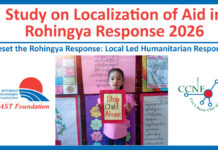

COAST Foundation and CCNF has conducted a study. The study examines localization of aid in the Rohingya response, highlighting persistent dominance of international actors. UN agencies hold 53.8% of Rohingya Coordination Team representation, while each NGO category holds 15.4%. In JRP 2026 funding, UN agencies has 87.96% fund as appealing partner, while INGOs 7.78%, and national NGOs 4.26%, and local NGOs have 0% funding as appealing partner. Among 519 million BDT in project funding, local NGOs received only 2.5%. The study recommends stronger local leadership, direct funding, equitable partnerships, and institutional support. For the full report click here.