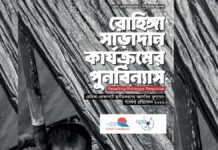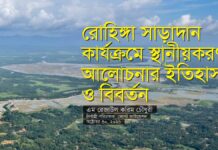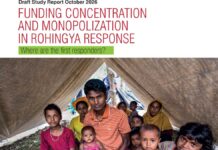

M Rezaul Karim Chowdhury, the Executive Director of COAST Foundation wrote the History and Evolution of Localization Discourse in the Rohingya Response. He highlights that localization in the Rohingya response is a home-grown demand driven by the continuous efforts of Cox’s Bazar civil society, local NGOs and communities. During the first 40 days of the 2017 Rohingya influx, local NGOs, local government and local people provided food and shelter before UN agencies and INGOs responded. Since then, local actors have consistently advocated for peaceful coexistence, social cohesion and greater participation in humanitarian decision-making. Through CCNF and COAST, they promoted the Grand Bargain, Charter for Change and localization commitments. The 2018 Grand Bargain Mission and 2020 Localization Roadmap identified gaps between global commitments and field-level implementation. The report emphasizes that localization is not merely about increasing local implementing partners; it is about shifting power, sharing leadership, decision-making and resources, ensuring direct funding, and building equitable partnerships. Please download the full report click here.