

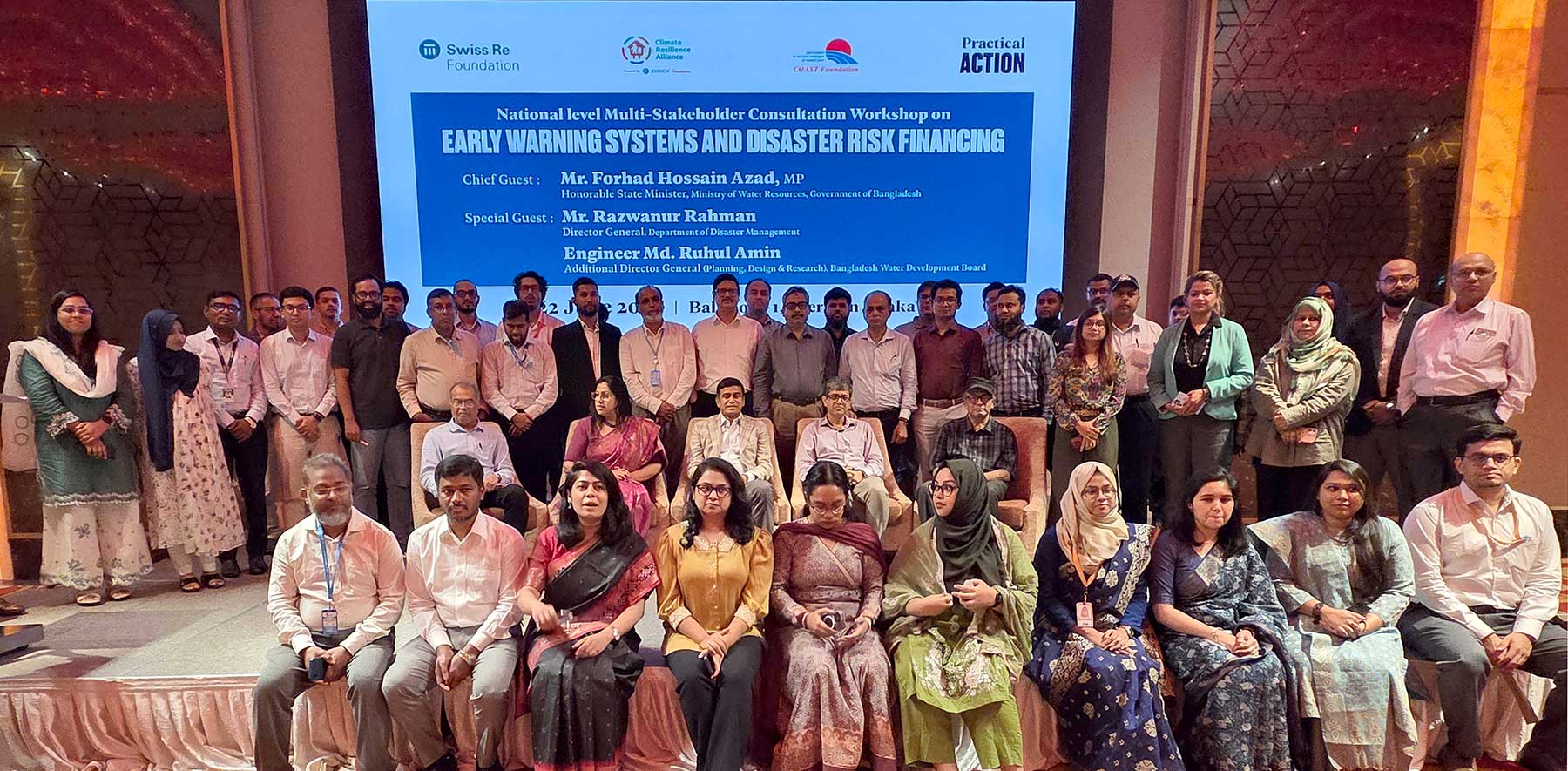
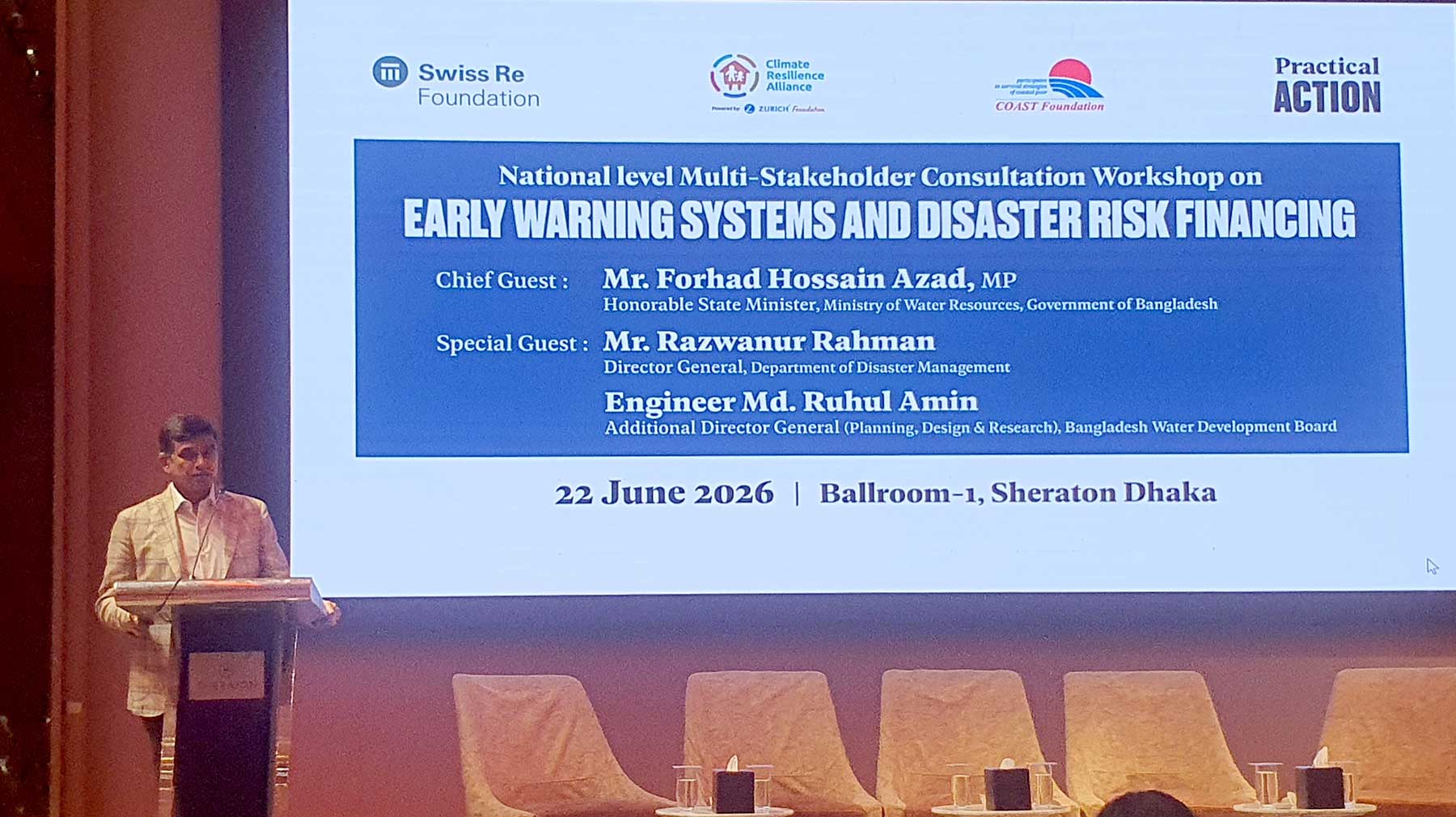
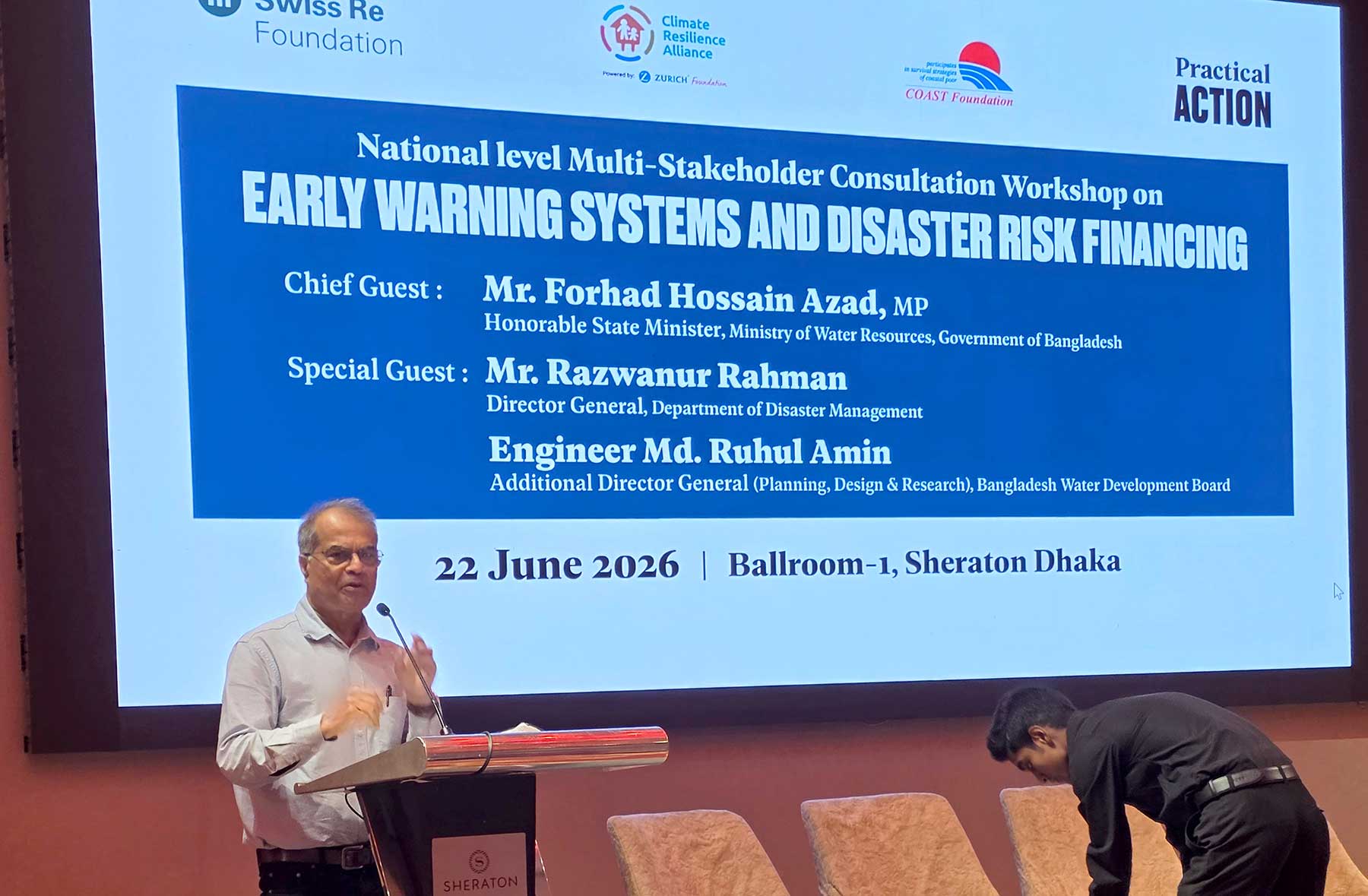
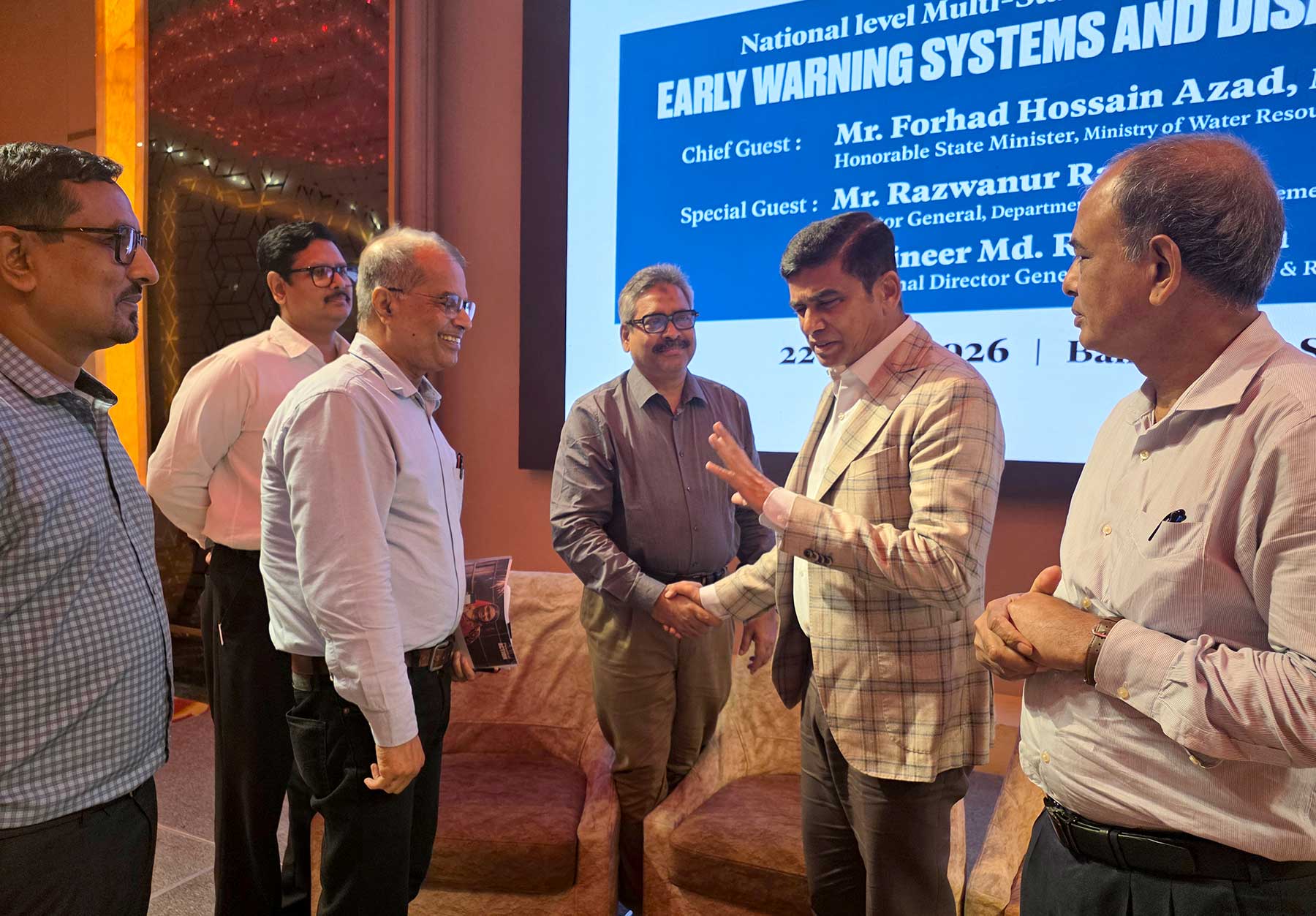
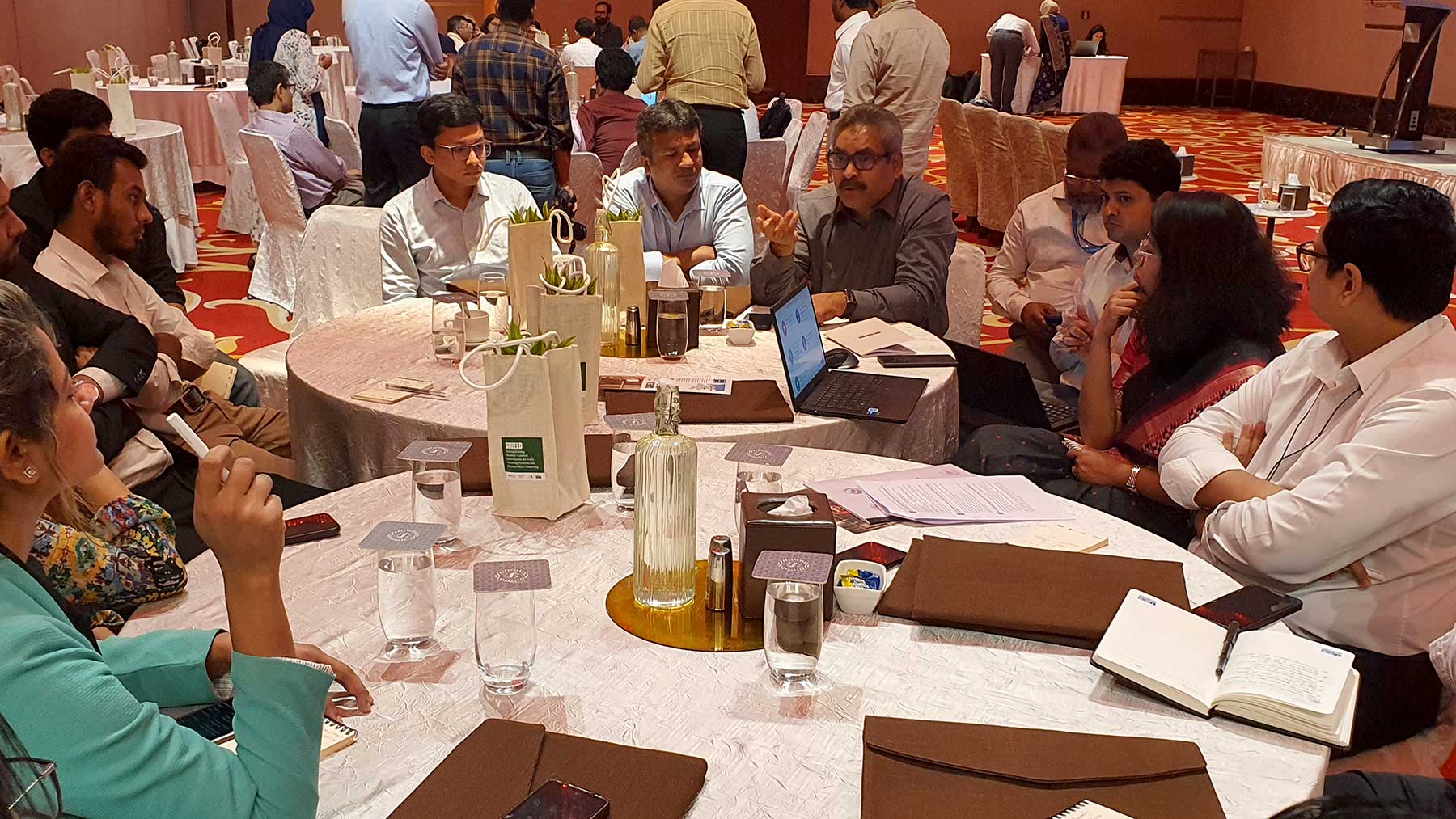
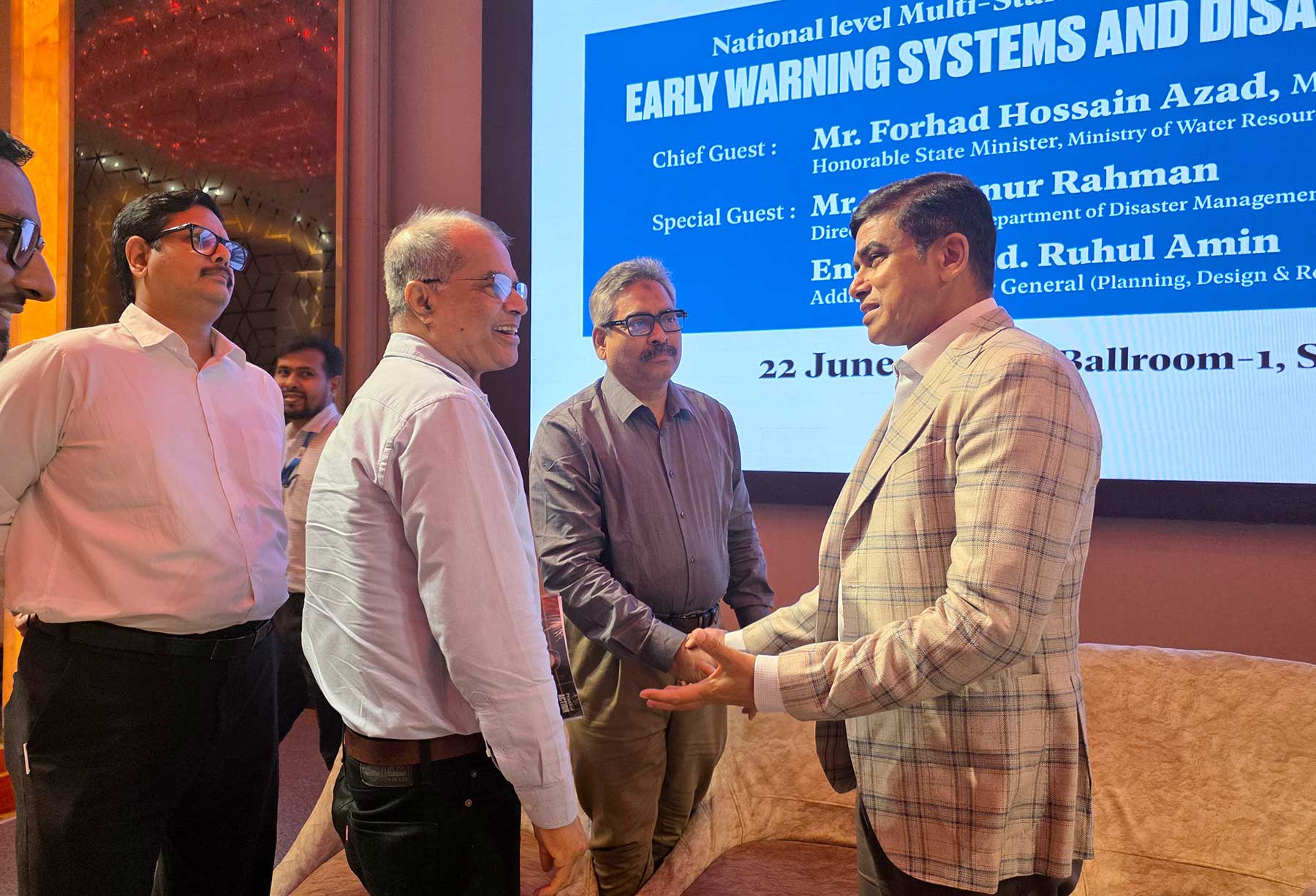
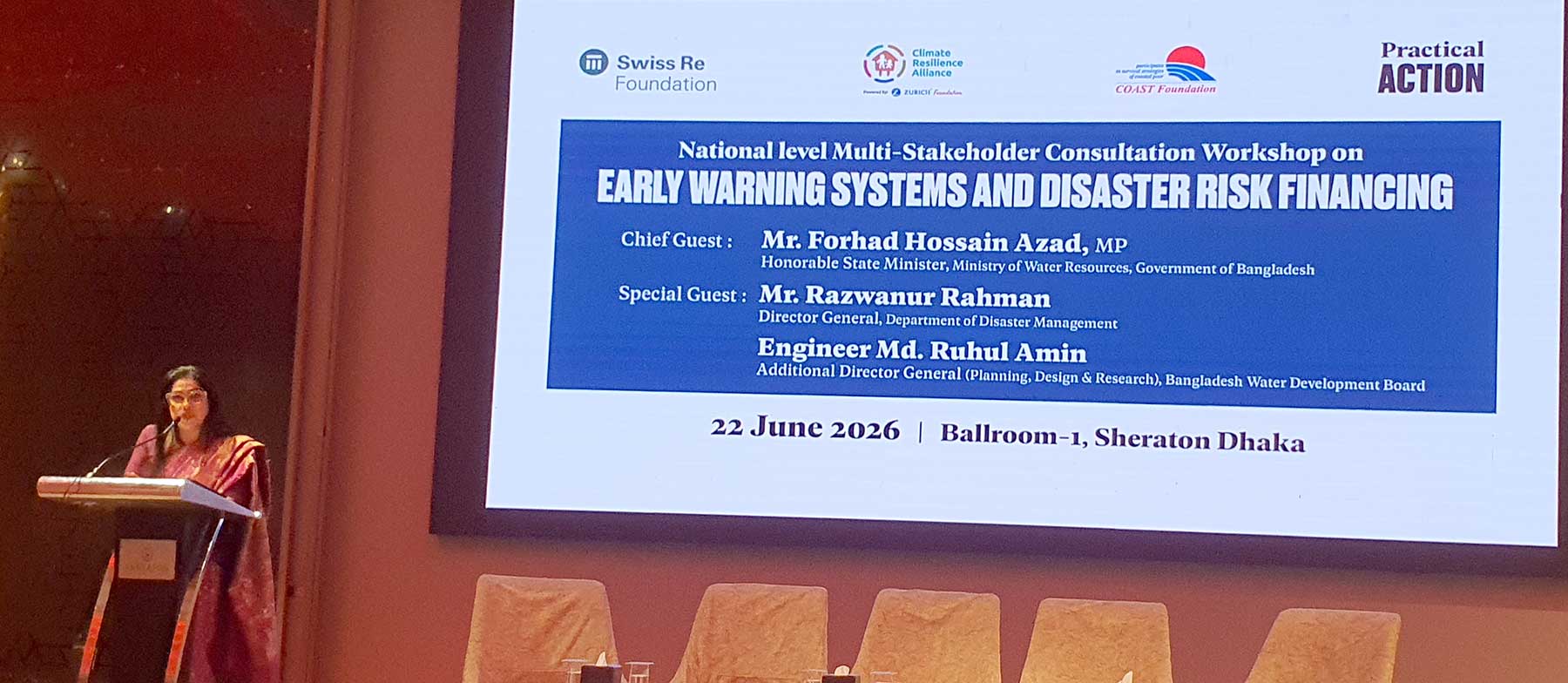
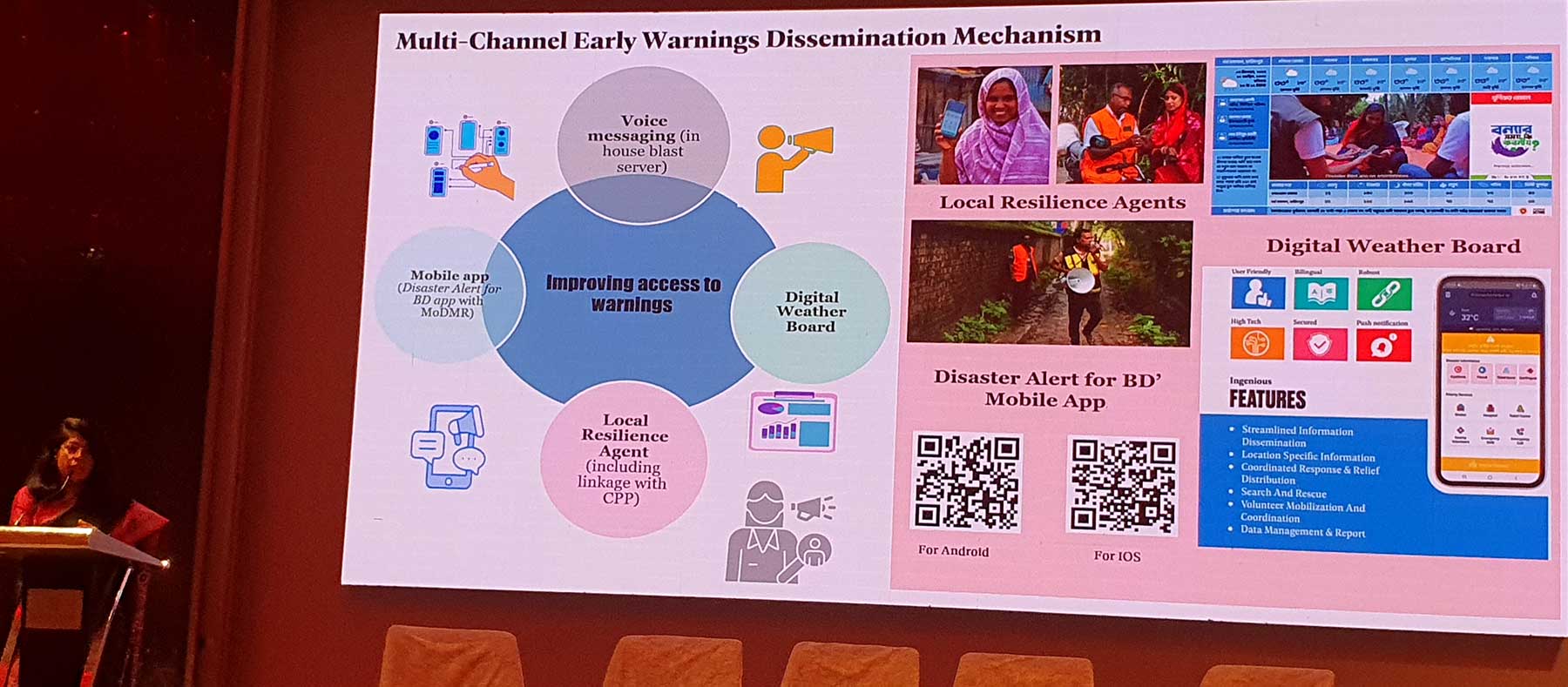
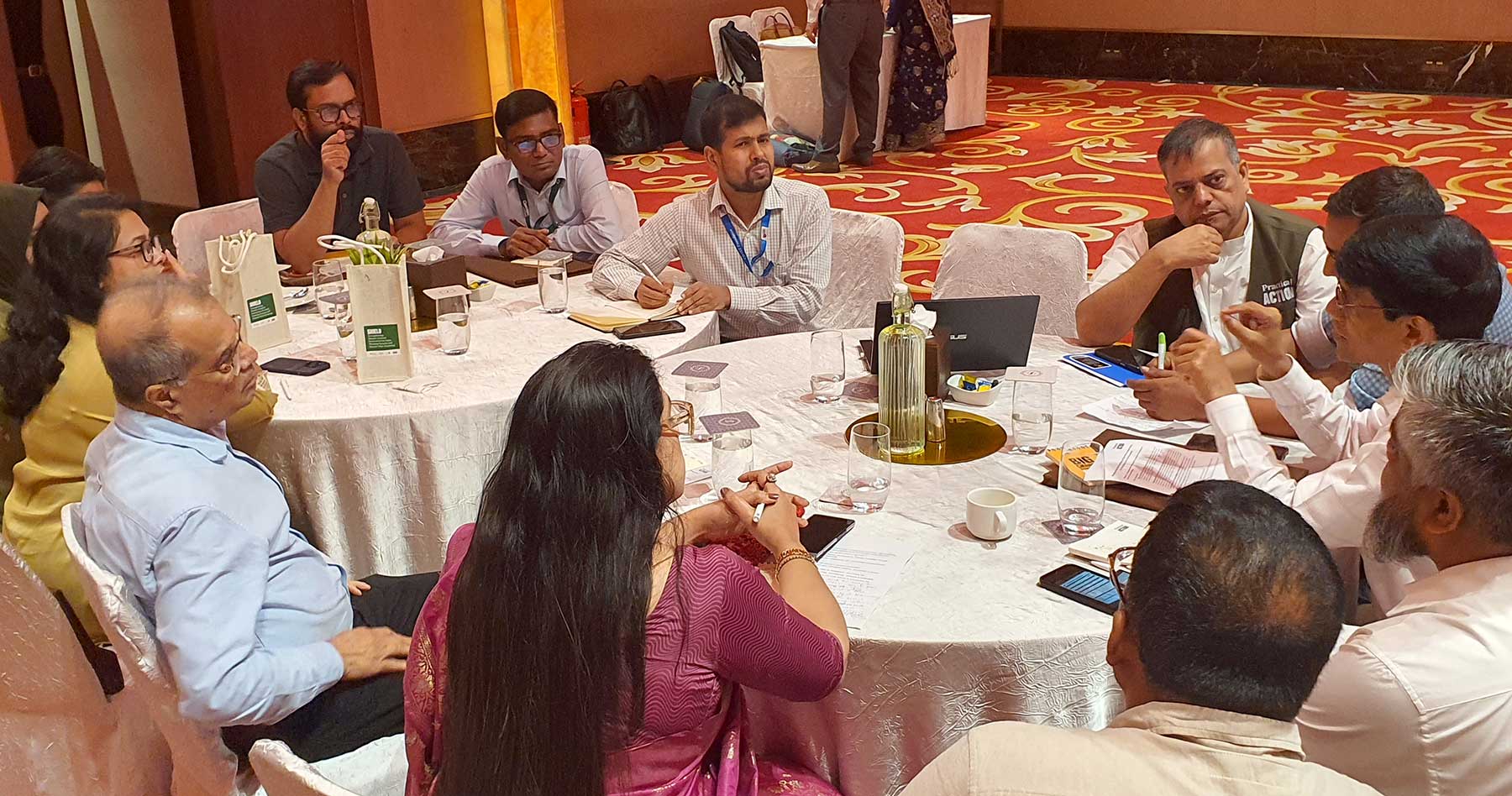
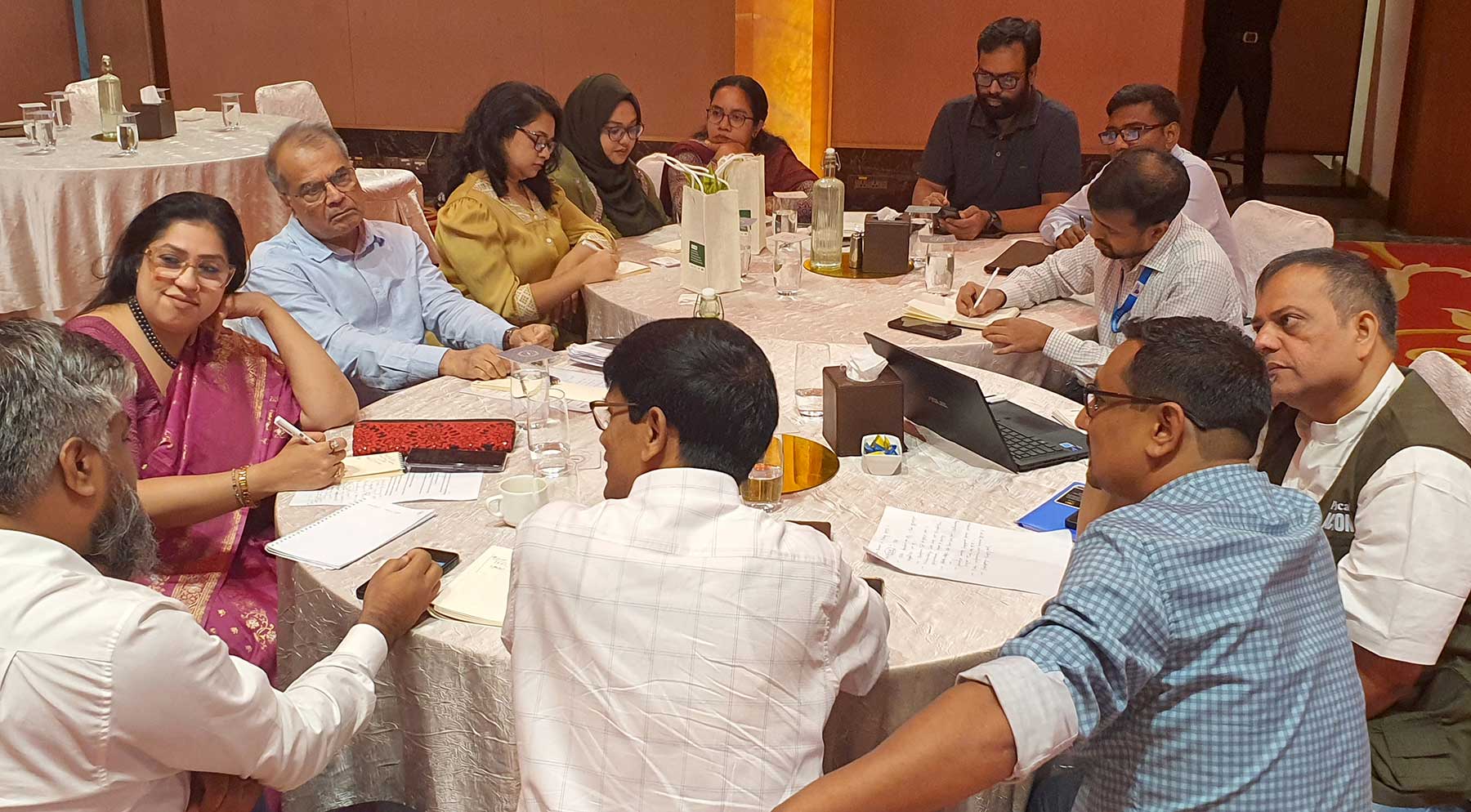
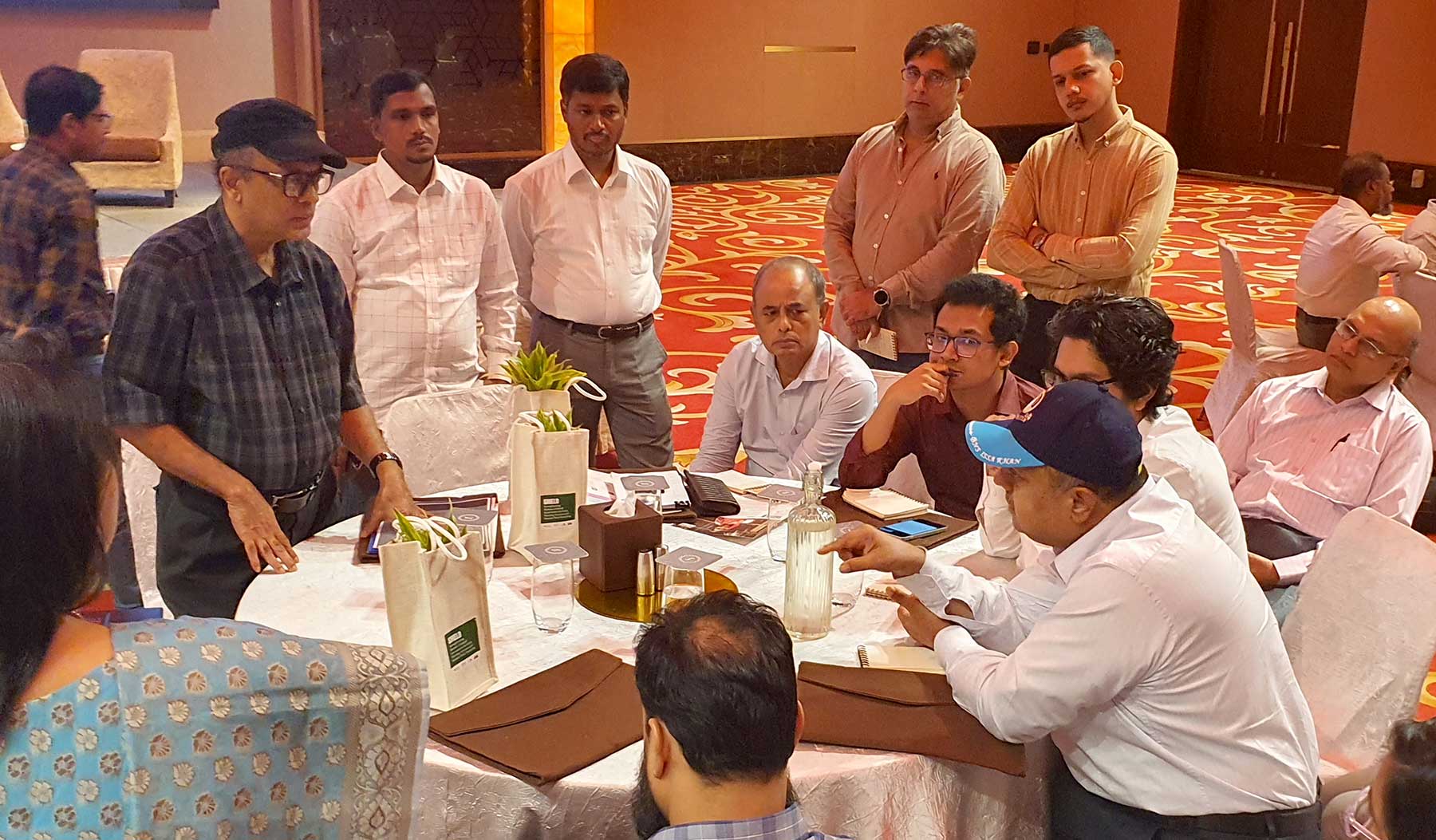
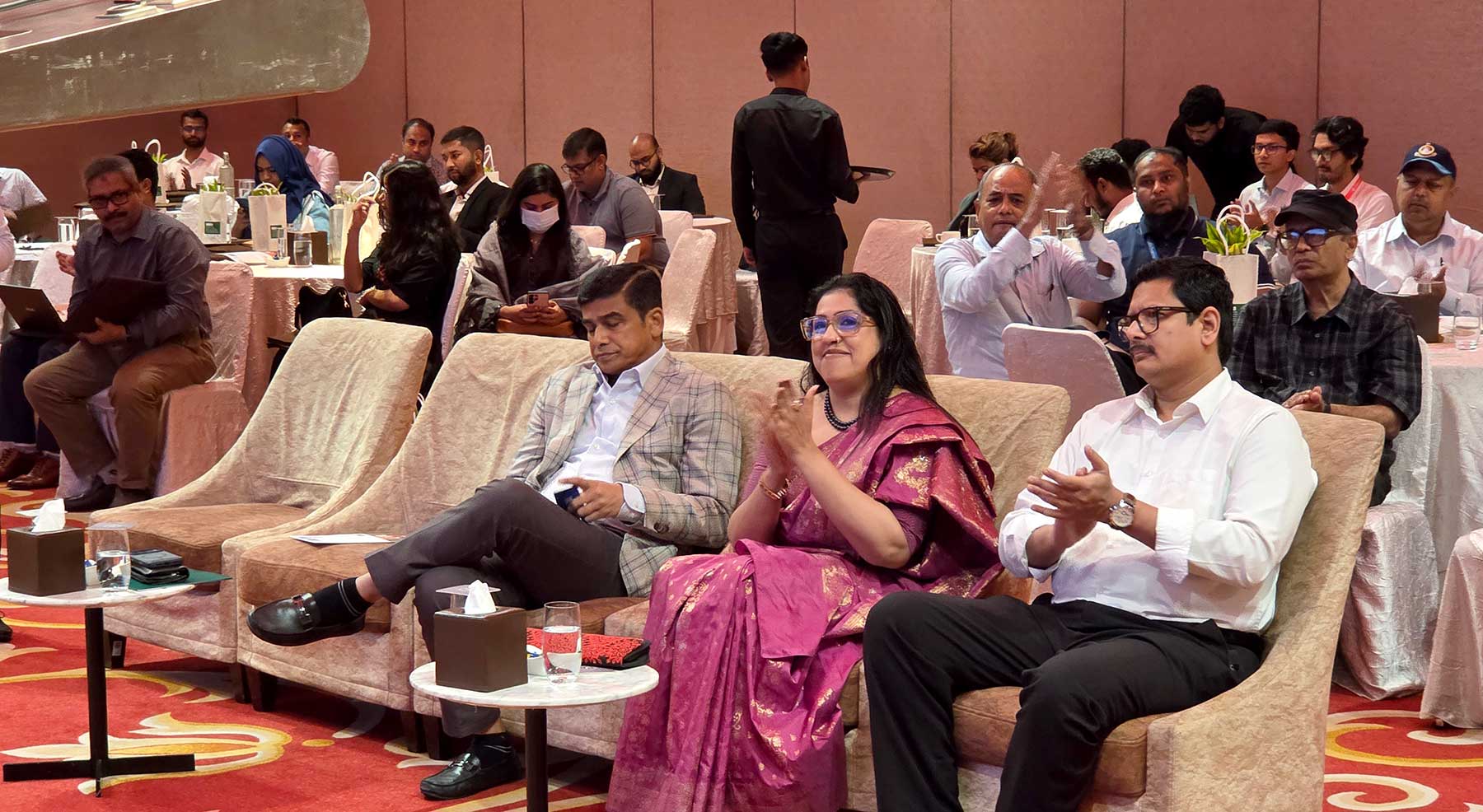
Today, on June 22, 2026 at Sheraton Dhaka, Practical Action hosted a multi-stakeholder consultation workshop on Early Warning Systems and Disaster Risk Financing. The chief guest was Mr Forhad Hossain Azad, Member of Parliament, Honorable State Minister, Ministry of Water Resources, Government of Bangladesh (GoB), with special guests including Razwanur Rahman, Director General, Department of Disaster Management; Engineer Md. Ruhul Amin, Additional Director General, Bangladesh Water Development Board; and the Executive Director of COAST Foundation, Rezaul Karim Chowdhury. The event was welcomed by Ishrat Shabnam, Country Director of Practical Action in Bangladesh, and the project brief was presented by Palash Sarker, Project Manager, and Tamanna Rahman, Thematic Lead -Climate Resilience of Practical Action in Bangladesh. Other notable attendees included Netai Chandra Sarkar from the Department of Disaster Management, and Professor Dr. Anisul Haque from IWFM, BUET, along with Rakesh Supkar, Asia Regional Head of Impact and Operations at Practical Action. Besides Governments stakeholders, people joined from UN agencies, Development Bank, private sector were also participated in this workshop. The workshop set a strong foundation for advancing Early Warning Systems and Disaster Risk Financing in Bangladesh.
In the workshop, Practical Action introduced a new project named Strengthening Human-Centered Innovation for Early Warning Systems and Disaster Risk Financing (SHIELD) in the Feni district, expanding beyond their previous work in Khulna, Satkhira, and Faridpur districts with the support from Z Zurich Foundation. COAST Foundation will implement the project at Feni district. This project is funded by Swiss Re Foundation and co-financed by Z Zurich Foundation.
Ms Ishrat Shabnam said in her speech that the project will address climate risks in Feni district using AI and machine learning for early warnings and innovative solutions. They will also implement disaster risk financing and impact-based forecasting with the technical support from IWFM -BUET. Finally, through the COAST Foundation, they aim to build hope and trust in the community, proving that climate change is a real, tangible issue, and they will achieve this through the project.
Razwanur Rahman said that the GoB is also working on the UN’s “Early Warning for All” initiative by 2027, with much potential for further progress. The government has approved a strategy for anticipatory action and disaster risk financing, and the Ministry of Finance is working on how to provide better protection through insurance. We hope this project will address these aspects and that, through it, the government will be able to engage effectively.
Rakesh Supkar said that the project will provide Early Warning Messages in a way that helps people reduce their risk from disasters. They said that this project will strengthen the early warning systems, because disasters don’t just take lives; they also destroy livelihoods. They recalled the experience in India in 1999, when a cyclone occurred, and there was no early warning message for people. Based on this, they hope that the government’s plan and various policies, especially in the early warning systems, will be supported and promoted by this project.
Forhad Hossain Azad MP emphasizes that Practical Action’s approach is crucial, as early warning data is often limited, and without it, we struggle and we loss. He also noted that the Ministry of Water Resources, Ministry of Disaster and Relief and Ministry of Environment, Forest and Climate Change are working together in ensuring same goal of protect the people. He focused on that message should be simple in Bangla for rural people. By building trust early, they hope to reduce disaster risks. Finally, he stressed that all INGOs and NGOs will work in coordination with one another.
Rezaul Karim Chowdhury concluded by thanking everyone and noted that in Feni, they learned from their work that simply providing relief is not enough. People also need a way to recover, with tools and means to rebuild. He emphasizes that alongside relief, future food security must be addressed. Without it, they cannot fully reduce risk. Thus, he said, planning for food security after a disaster is vital. He expressed hope that, with Practical Action, this project will succeed, using innovation, early warnings, and disaster financing to reduce risk, and he thanked everyone once again. [Press Release English]
Photos
|
 |
 |
 |
 |
 |
 |
 |
 |
 |
 |
 |
Newslink
 |
 |
 |
 |
 |
 |