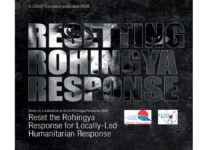

The document highlights the growing water crisis in Ukhiya and Teknaf, Cox’s Bazar, driven by population pressure including Rohingya population, excessive groundwater extraction and inadequate infrastructure. Approximately 28% of households lack access to potable water during the dry season, while 7,000 Tube wells are non-functional out of 31,000 tube wells in Cox’s Bazar (IOM, 2023; UNICEF & UNHCR, 2022). In Rohingya refugee camps, daily groundwater extraction reaches 15 to 20 million litres, contributing to groundwater depletion of approximately 8 to 14 feet annually. Saline intrusion further threatens freshwater availability, public health and livelihoods of Rohingya refugees and host communities. The study recommends regulating groundwater extraction, expanding surface-water treatment, systematic monitoring, rainwater harvesting, pond restoration and aquifer recharge. Download the full report click here